



How to Choose a Hair Removal Laser Machine in 2026?
Choosing a Hair Removal Laser Machine in 2026 requires more than comparing prices or counting treatment modes. Clinics must examine wavelength, pulse duration, fluence control, spot size, cooling performance, and skin-type compatibility. These details affect treatment comfort, consistency, and operational safety.
A reliable evaluation begins with the intended users and treatment area. A compact device may suit a small studio, while a high-volume clinic needs faster repetition rates, durable handpieces, and simple maintenance access. Alexandrite, diode, and Nd:YAG systems offer different advantages for various hair colors and skin tones. However, marketing claims can make these differences seem easier than they are. Ask for technical specifications, independent evidence, user training, warranty terms, and documented service support.
Safety should remain central. The machine should include adjustable parameters, effective cooling, clear operating guidance, and appropriate protective equipment. Professional users also need training that covers consultations, contraindications, patch testing, and realistic client expectations. Regional certification and medical-device requirements must be checked before purchase.
A common mistake is choosing the most powerful model. More power does not automatically mean better results. In practice, treatment quality depends on correct settings, suitable candidates, regular maintenance, and careful follow-up. Even experienced buyers can overlook replacement costs, software limitations, or the availability of spare parts. This guide examines these practical factors and encourages a more cautious question: does the Hair Removal Laser Machine fit your team, clients, budget, and long-term service plan? There is no perfect device. There is only a better-informed choice.
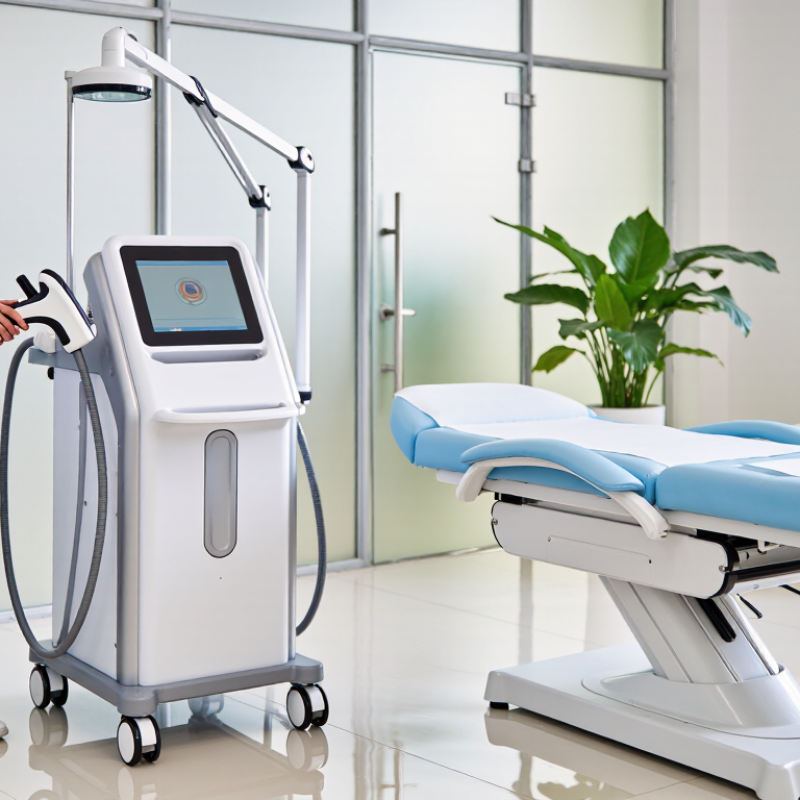
Laser Hair Removal Basics: Technologies, Skin Types, and Hair Characteristics
Choosing a hair removal laser machine in 2026 starts with skin and hair assessment, not marketing claims. Common technologies include diode, alexandrite, and Nd:YAG lasers. Intense pulsed light is different from a true laser. Each system delivers light differently, so a qualified practitioner should match wavelength, pulse duration, and cooling to the client.
Melanin absorbs light. That helps target the follicle, but it also increases surface-skin risk. Lighter skin may tolerate several wavelengths, while deeper skin tones often require careful settings and appropriate cooling. This is not a fixed rule. A trained provider should review tanning, medication, scars, and previous reactions before treatment. Dark, coarse hair usually responds more clearly because it contains more pigment. Blonde, red, white, and gray hair can be slower or unsuitable for many light-based systems. Hair growth cycles matter too; one session cannot treat every follicle.
Tips: Ask for a test patch before full treatment. Confirm the operator’s training and maintenance records. Avoid treating recently tanned skin. Request protective eyewear and clear aftercare instructions. Take photos under similar lighting to track changes, not promises. I have found that aggressive settings do not always mean better results; comfort and safety deserve equal attention. Some devices look impressive on paper, yet poor technique can reduce their value. Temperature, contact pressure, and treatment timing are easy details to overlook.
How to Choose a Hair Removal Laser Machine in 2026? — Laser Hair Removal Basics: Technologies, Skin Types, and Hair Characteristics
| Technology | Typical Wavelength | Most Suitable Skin Types | Hair Characteristics | Main Advantages | Important Limitations and Risks | Selection Guidance |
|---|---|---|---|---|---|---|
| Alexandrite Laser | 755 nm | Usually most effective for lighter skin tones, approximately Fitzpatrick I–III; experienced professionals may use it selectively on type IV skin with appropriate settings. | Best for coarse, dark brown or black hair. It is generally less effective on fine hair and hair with little pigment. | High melanin absorption can provide strong treatment performance on suitable light skin and dark hair. Large spot sizes may support faster coverage. | Higher melanin absorption also increases the risk of epidermal heating, burns, and temporary or persistent pigment changes on darker or recently tanned skin. | Consider when the treatment area has dark hair and the client has untanned, relatively light skin. Strict sun protection is important. |
| Diode Laser | Commonly 800–810 nm; some systems use nearby wavelengths | Often used across Fitzpatrick I–V when operated by a trained professional and adjusted for skin tone, hair, and treatment area. | Works best on medium-to-coarse pigmented hair. Fine hair may require more sessions and careful parameter selection. | Offers a practical balance between melanin absorption and penetration depth. Many systems include contact cooling and adjustable pulse durations. | It is not automatically safe for every skin tone. Excessive fluence, inadequate cooling, or treatment of tanned skin can cause burns or pigmentary changes. | A versatile option for clinics treating a broad range of skin tones, provided the machine has suitable cooling, controls, and trained operation. |
| Nd:YAG Laser | 1064 nm | Generally the preferred laser wavelength for darker skin tones, including many Fitzpatrick IV–VI cases, when used with appropriate protocols. | Most useful for coarse, deeply pigmented hair. Fine or lightly pigmented hair usually responds less reliably. | Longer wavelength penetrates deeper and has relatively lower melanin absorption in the epidermis, which can reduce—but not eliminate—surface pigment risk. | May require more sessions or higher treatment expertise for lighter, finer hair. Pain, temporary swelling, burns, and pigment changes remain possible. | Often the leading consideration for darker skin, especially when the device provides effective cooling and experienced clinical supervision. |
| Ruby Laser | 694 nm | Generally limited to very light, untanned skin, approximately Fitzpatrick I–II. | Most effective on coarse, dark hair with strong pigment contrast against the skin. | Strong absorption by melanin can produce effective follicle heating in carefully selected light-skin cases. | Higher melanin absorption creates a greater risk of burns and pigment changes on medium-to-dark skin. It is less commonly selected in modern practice. | Usually not a first choice for diverse skin-tone treatment. Consider only with appropriate clinical expertise and patient selection. |
| IPL System (Not a Laser) | Broad spectrum, commonly about 500–1,200 nm with filters | Typically better suited to lighter skin with dark hair. Some systems have filters and protocols for darker skin, but risk management is essential. | Most effective when hair contains substantial melanin; response is poor for white, gray, and many very light-blond hairs. | Broad-spectrum light can cover large areas quickly, and many systems offer interchangeable filters and cooling features. | Because the light is broad spectrum, control over tissue absorption differs from a single-wavelength laser. Incorrect settings can cause burns or pigmentary changes. | Choose only after confirming that the device is appropriate for the intended skin tones, hair colors, treatment areas, and operator training level. |
| Electrolysis (Alternative Method) | Electrical current; no optical wavelength | Can be used on a wide range of skin tones when performed correctly. | Can treat individual follicles regardless of hair color, including white, gray, blond, and red hair. | It is the main permanent hair-removal method that does not depend on hair pigment. It is useful for small areas and residual hairs after laser treatment. | Each follicle is treated individually, so large areas take longer. Discomfort, temporary redness, scabbing, and occasional scarring or pigment changes are possible. | Consider for light-colored hair that does not respond well to laser or IPL, and for precision work on small areas. |
| White, Gray, or Very Light-Blond Hair | Not a wavelength category | Skin tone does not overcome the lack of sufficient follicular melanin for most laser and IPL systems. | Usually contains too little melanin to absorb enough optical energy for reliable follicle heating. | Some darker or coarser individual hairs may show limited response if they contain enough pigment, but results are inconsistent. | Increasing energy to compensate for absent pigment may raise skin-injury risk without improving effectiveness. | Discuss electrolysis or another clinically appropriate alternative rather than assuming a higher-powered laser will solve the problem. |
| Fine or Vellus Hair | Depends on the selected device | All skin tones require careful assessment because the target is small and may be close to pigmented skin structures. | Fine hair has a smaller target and often less pigment, so it generally responds less consistently than coarse hair. | Some devices and carefully selected settings may improve certain pigmented fine hairs, especially when the hair is still visible and actively growing. | Results can be limited. Rare paradoxical hypertrichosis has been reported, particularly in some facial-treatment situations and certain risk profiles. | Request a professional assessment and realistic expectations; avoid treating areas where the potential benefit is low. |
| Cooling and Safety Features | Not applicable | Essential for every skin type, with especially careful risk control for darker or recently tanned skin. | Cooling does not change hair pigment, but it can improve comfort and help protect the epidermis during treatment. | Contact cooling, sapphire cooling, cryogen spray, or chilled air may reduce discomfort and surface heating when correctly integrated. | Cooling cannot compensate for incorrect fluence, pulse duration, wavelength selection, or treatment of unsuitable skin. | Prioritize adjustable parameters, reliable cooling, skin assessment, protective eyewear, test spots, maintenance records, and trained operators. |
General principle: Laser and IPL results depend on skin tone, hair color, hair diameter, treatment area, growth cycle, hormonal factors, device settings, cooling, and operator training. A consultation and test spot should be considered before a full treatment.